

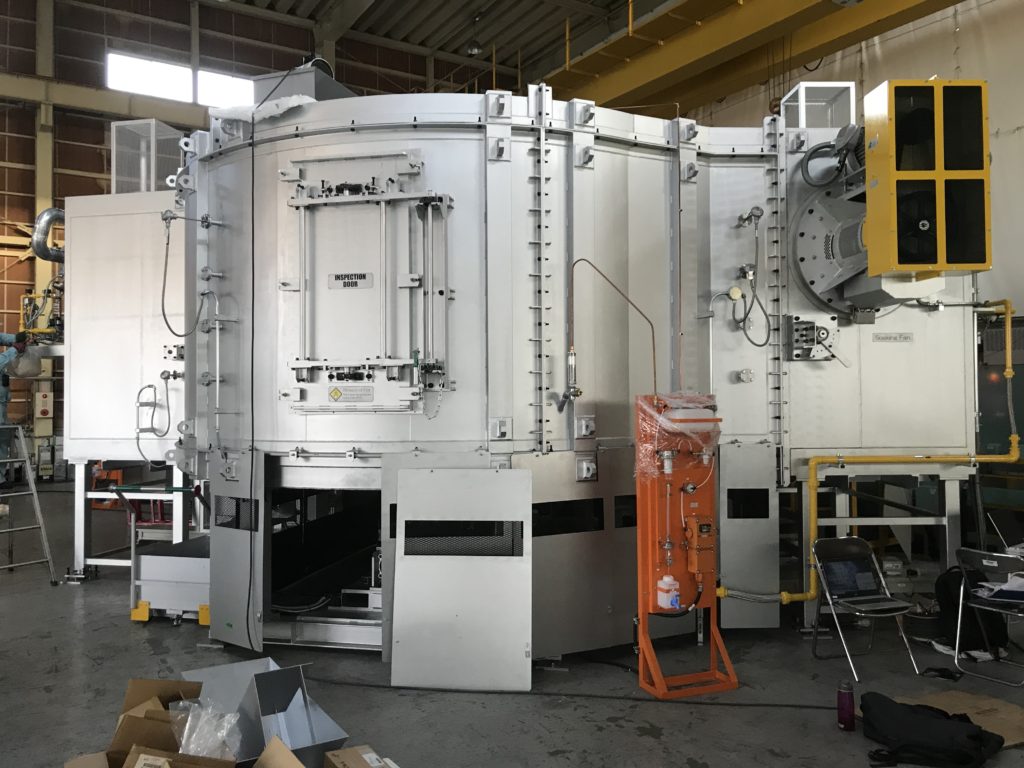
Industrial furnaces are at the core of thermal processes in manufacturing plants. Their stable operation is critical to productivity, while any explosion can cause massive property damage and, more seriously, loss of life.
Although safety awareness has increased in recent years, the risk of explosion has not yet been fully eliminated at many facilities.
In this article, we explain how explosions occur in industrial furnaces, the importance of gas detection required under the latest safety standards, and the operational “blind spots” that many sites still overlook.
Why do reactor explosions occur?
Most industrial furnace explosions occur when an ignition source ignites combustible gas that has accumulated inside the furnace. This is generally attributed to unburned fuel gas remaining after an ignition failure or flameout of city gas.
However, there is another critical hazard that must not be overlooked: carbon monoxide (CO) and hydrogen (H₂) generated by incomplete combustion of fuel gas.
Carbon monoxide is commonly associated with poisoning, but in confined spaces such as industrial furnaces it is also a highly dangerous combustible gas, with an explosive range comparable to hydrogen. When city gas burns incompletely, large quantities of CO and H₂ can be produced and build up inside the furnace. These gases tend to persist even in oxygen-poor conditions, and if air is introduced and an explosive mixture forms, a sudden, violent explosion can result.
Preventing Furnace Explosions
The fundamental approach to preventing explosions is to design furnaces implementing multiple layers of protection, including:
- Pre‑purging: Thoroughly replacing the air inside the furnace before ignition to remove unburned gases.
- Flame detection (e.g., flame rods): Immediately shutting off the fuel supply when the flame goes out to maintain safe combustion control.
- Interlocks: Automatically preventing or stopping ignition if ventilation is insufficient or pressure is abnormal.
- Combustible gas detection: Continuously monitoring gas concentration inside the furnace and issuing an alarm before it reaches the lower explosive limit (LEL).
What is particularly notable in the latest JIS standards is a change in how pre‑purging is positioned. Previously treated as a mandatory procedure, it is now regarded as the “best option” to be optimized in combination with other reliable safety measures—such as gas detection—while considering factors like energy efficiency, heat loss in the furnace, and the time required for reheating and restart.
In other words, instead of relying solely on the "procedure" of ventilation, the importance of ensuring safety through gas detectors that directly monitor the gas concentration inside the reactor is now more crucial than ever.
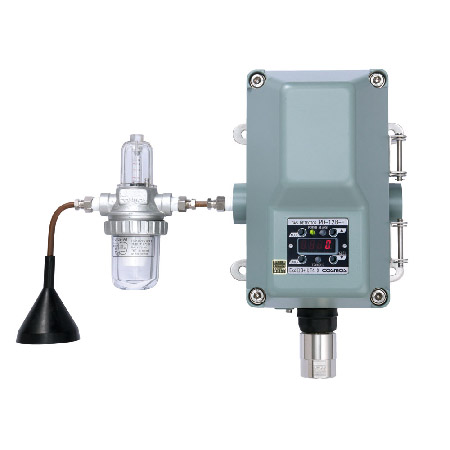
Gas Detection
The importance of gas detection inside the reactor
There was a time when it was assumed that “as long as the flame is on, it’s safe.” Today, however, safety design must address not only the risk of unburned fuel, but also the risk of explosions caused by gases such as CO and H₂ generated through incomplete combustion.
Carbon monoxide, in particular, can be produced even when a visible flame is present. For this reason, installing gas detectors that make this invisible risk “visible” has become an essential core safety measure. By reliably detecting gas before it reaches the lower explosive limit and triggering alarms and interlocks, explosions can be physically prevented. This role of in‑furnace gas detection is becoming increasingly important for ensuring on‑site safety.
Operational Blind Spots After Installing In‑Furnace Gas Detectors
However, simply installing gas detectors does not by itself ensure safety. Many sites encounter a major challenge: post‑installation maintenance.
Industrial furnaces are harsh environments, filled with tar generated from the heated materials, dust, and water vapor from combustion. As a result, the following problems are common:
- Pipe clogging: Water vapor condenses into droplets, which mix with tar and clog sampling lines.
- Sensor degradation: Direct exposure to contaminants can reduce sensor sensitivity or cause malfunctions.
To prevent these issues, routine tasks such as cleaning sampling lines and replacing filters are essential. In practice, however, maintenance places a heavy burden on operators, and with ongoing labor shortages, inspections can easily become a mere formality.
“The detector is installed, but in reality it is not drawing air properly.”
This decline in day‑to‑day inspection is the biggest operational blind spot.
A self‑diagnostic sampling panel dramatically reduces the burden of daily inspections.
Our Self‑Diagnostic Sampling Panel is a pretreatment unit developed to protect gas detection sensors. By using a dehumidifier to reduce condensate and filters to remove tar, it enables accurate in‑furnace gas measurement while safeguarding the sensor.
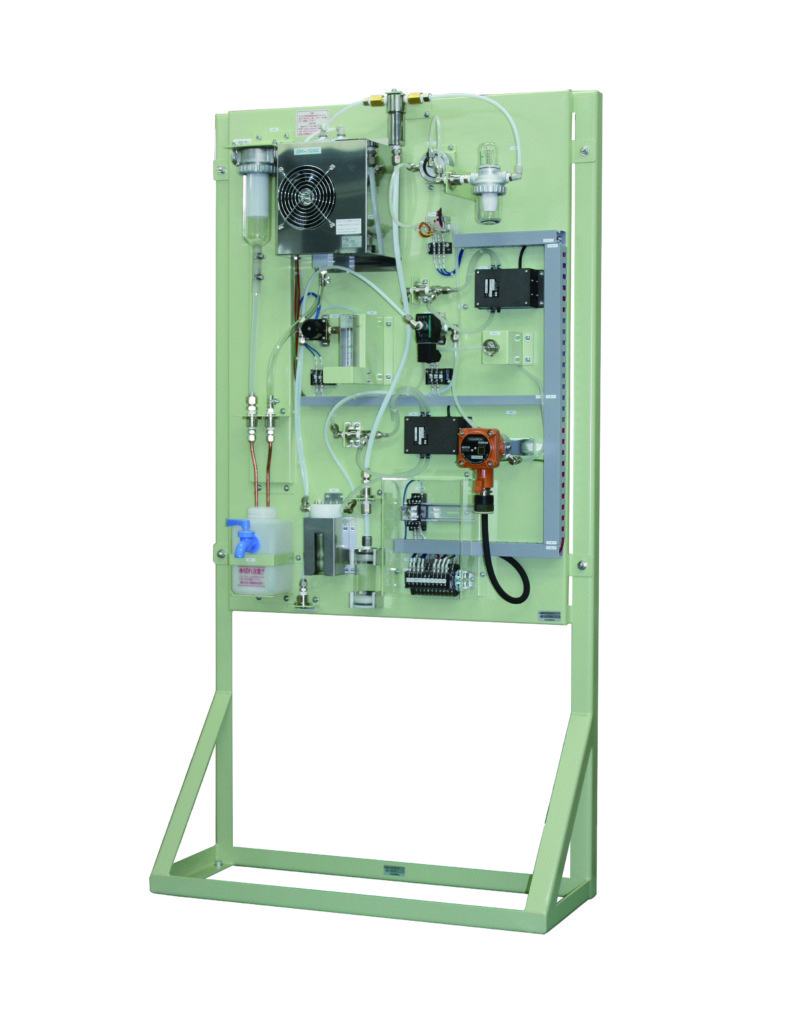
Self-diagnostic sampling disc
The strength of our Self‑Diagnostic Sampling Panel lies in its ability to adapt to a wide range of furnace environments and applications. Because the type and amount of tar and the dust conditions differ from furnace to furnace, we design the optimal sampling system for each site by selecting suitable filters and optimizing the system configuration.
In addition, operators can secure safety before ignition simply by following these steps at the start of work:
-
Verify correct detector operation at the push of a button. The system automatically self‑checks flow rate and sensor response by introducing test gas from the check‑gas generator into the sampling line.
-
Switch on the gas detectors before ignition and confirm that no unburned gas is present in the furnace.
These functions significantly reduce the daily inspection burden on on‑site personnel.
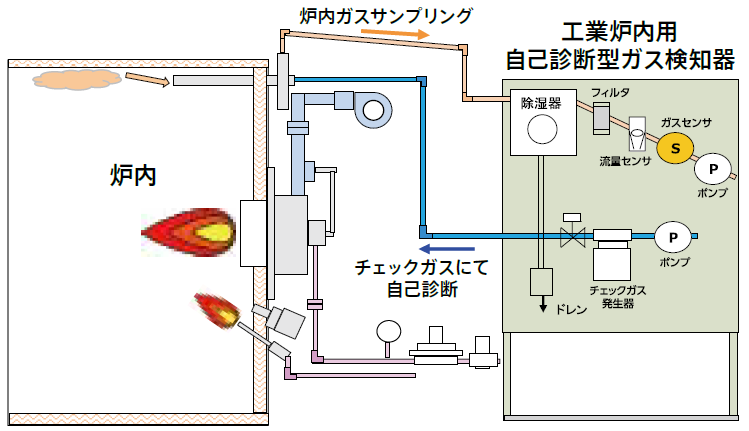
Installation image
In addition to unburned fuel gases, the system also reliably detects carbon monoxide and hydrogen generated by incomplete combustion. This helps prevent explosions caused by these gases and provides strong support for safe, stable furnace operation.
If you are facing challenges with in‑furnace gas detection or safety design, please feel free to contact us.